

A Smart Home Platform Has to Work After the Demo
After almost 24 years of kicking the tires, we know what we look for in a smart home platform — and what we can trust long term.
Smart home technology can look impressive in a demo. The real test comes later — when the family moves in, guests arrive for the weekend, the lights need to work, the shades need to move, the music needs to play, and the network needs to hold everything together.
At SHORE Smart Home, we build around platforms we can design properly, install cleanly, support confidently, and stand behind over time. That is why platform choice matters so much in professional smart home integration.
The Real Test Comes After Move-In
In a well-designed home, technology is not just a collection of devices.
A smart home system can look great in a showroom, a trade show booth, or a quick product demo.
That is not the hard part.
The real test comes after the home is finished. A homeowner may be heading out to dinner and want the lights, shades, music, security, and climate to respond the way they should. Guests may be staying for the weekend and need the TV, Wi-Fi, and music to be simple. When the homeowner is away, they may want to check the house, adjust a setting, or know that our team can support the system if something needs attention.
That is where the right platform matters.
A good smart home platform should not feel like another thing to manage. It should make the home easier to use, easier to understand, and easier to support over time. That is why our Smart Home Integration process starts with how the home will actually be used, not just which products are going into it.
At SHORE Smart Home, that is the filter we use. We are not looking for the newest gadget or the flashiest demo. We are looking for systems that work reliably in real homes, with real families, real guests, real service needs, and real expectations.
What Actually Matters After Installation
After almost 24 years in this business, we have learned to care less about the flashiest demo and more about what happens after the system is installed.
Those questions matter more than a spec sheet.
A smart home platform needs to be reliable, flexible, and supportable. It needs to work with lighting, shades, audio, video, security, networking, climate, and the other systems that make a home function. It also needs strong backend support, because even the best homes need service, updates, adjustments, and long-term care.
That is why we are selective about the platforms we build around.
What We Look For in a Smart Home Platform
I’ve spent almost 24 years kicking the tires on smart home systems. Here are a few honest answers about what we look for, what we avoid, and why Control4, Lutron, and Josh.ai have become core platforms for SHORE Smart Home.
Q: After almost 24 years in this business, what do you look for in a smart home platform?
At this point, I care a lot less about the flashiest demo and a lot more about what happens after the system is installed.
Can we design and install it properly? Will the homeowner actually use it comfortably? Can our team support it when something needs attention?
Those are the questions that matter.
Q: So it is not just about features?
Not even close.
Features are easy to talk about. Every product has a list of things it says it can do. The harder question is whether the system works reliably in a real home, with real people using it every day.
A shore house is not a trade show booth. Families show up for the weekend. Guests need to use the TV. Someone wants music outside. The Wi-Fi needs to work. Shades need to move when expected. Lighting needs to make sense to everyone using the home. If something needs attention, we need the tools and access to support it properly.
That is where the right platform matters.
What Makes a Smart Home Platform Worth Building Around?
Q: What makes a platform worth building around?
Reliability is first. If the system is flaky, nothing else matters.
After that, supportability is huge. Strong backend tools, dealer support, documentation, and a manufacturer that stands behind the product all matter. Flexibility matters too, because every home is different. A platform has to work with lighting, shades, audio, video, security, networking, climate, and the way the homeowner actually lives. That long-term support mindset is also why we built SMART-Care for ongoing system care after installation.
The best systems do not make the home feel more complicated. They make it feel easier.
Why We Are Selective About the Platforms We Use
Q: Why be selective? Why not offer every smart home product people ask about?
Because we have to live with the system after it is installed.
That may sound blunt, but it is true. If we put something into a client’s home, we need to be able to stand behind it. We need to know how it behaves, how it integrates, how we update it, how we service it, and what happens when the homeowner calls us months or years later.
We have kicked the tires on a lot of products over the years. Some were promising. Others worked well for a while. A few looked much better in the brochure than they did in real life.
At the end of the day, we would rather be excellent with the platforms we trust than average with everything.
Q: Is that how Control4, Lutron, and Josh.ai became core SHORE platforms?
Yes.
They each play a different role, but they all meet the same basic test: we can design with them, integrate them, support them, and stand behind them.
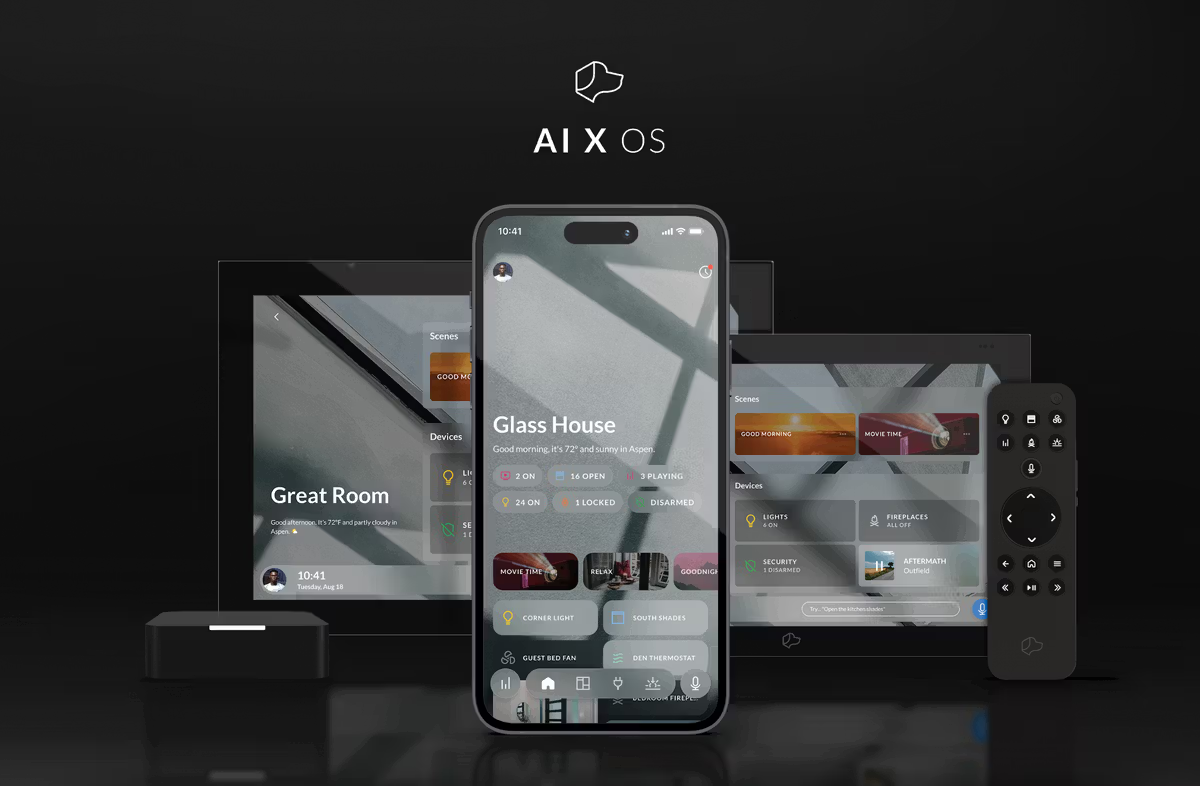
Control4 gives us a strong control platform for bringing the home together. Lutron gives us lighting and shading systems we trust deeply. Josh.ai gives homeowners a more natural way to control the home through voice, touch, text, and AI.
The important part is not just the brand names. It is how these systems work together when they are designed properly.
That is the work.
We Integrate Smart Homes.
The Platforms We Trust
Control4, Lutron, and Josh.ai each play a different role in the smart home, but they all matter for the same reason: they help us create systems that are reliable, intuitive, integrated, and supportable over time.
We do not choose these platforms because they are trendy. We choose them because they have proven themselves in real homes.
Control4
The Smart Home Backbone
Control4 gives the home a central platform for bringing lighting, shades, audio, video, security, climate, and everyday control together. It helps turn separate systems into one experience that can be controlled from touchscreens, remotes, keypads, phones, and programmed scenes.
For many SHORE Smart Home projects, Control4 is the layer that helps the home feel connected instead of complicated.


Lutron
Lighting and Shades We Trust
Lutron has earned its place in our work because lighting and shades need to be dependable. Homeowners use them every day, often without thinking about them, and that is exactly the point.
From lighting control and keypads to motorized shades, Palladiom details, HomeWorks, RadioRA 3, and Ketra, Lutron gives us solutions we can design around, integrate cleanly, and support confidently.
Josh.ai
A More Natural Way to Control the Home
Josh.ai adds another layer to the smart home experience by making control feel more natural. Voice, touch, text, and AI-powered control can make lighting, shades, audio, video, climate, security, and scenes easier to access when the system underneath is designed properly.
Josh.ai is not a replacement for good design. It works best when it is part of a thoughtful smart home platform built on reliable systems.
Planning a Smarter Home? Start With the Right Platform.
The best smart home experience starts with systems we can design, integrate, and support properly. If you are building, renovating, or improving a South Jersey shore home, SHORE Smart Home can help you choose the right foundation before the technology becomes complicated.


