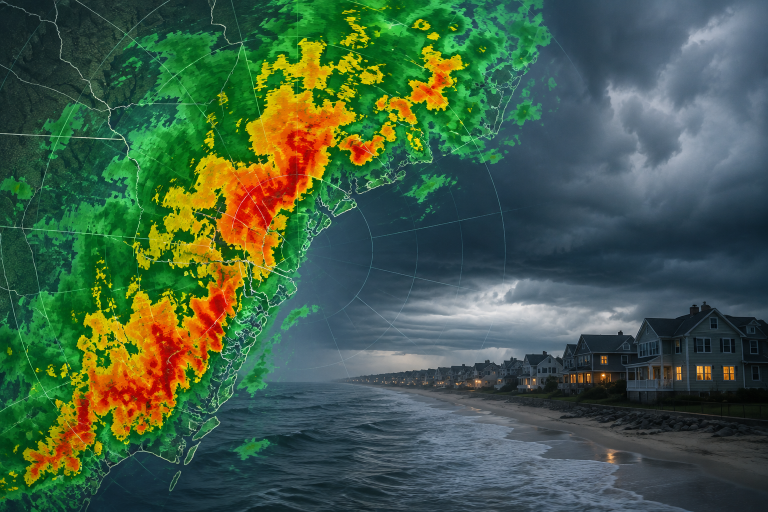

At the Shore, outdoor smart home technology has to deal with more than rain.
Salt air, heat, humidity, wind, sand, power problems, seasonal use, and exposure all affect how outdoor systems perform over time.
That is why outdoor technology systems needs more than equipment with a weather-resistant rating.
Good outdoor design starts with the environment.
Weatherproof Does Not Mean Indestructible
Manufacturers design outdoor-rated products to handle exposure.
That does not mean every location is appropriate.
A television exposed directly to prevailing weather will live a very different life than one under a covered porch.
An outdoor speaker mounted where water can collect around the connections will behave differently from one installed with proper drainage and cable protection.
A camera may carry an outdoor rating and still fail early if the installation exposes connectors or cabling to constant moisture.
The equipment rating matters.
The installation matters just as much.
Salt Air Changes the Equation
Coastal homes create another problem: salt.
Salt air finds its way onto metal surfaces, connectors, fasteners, mounting hardware, and exposed electronics.
Over time, that can accelerate corrosion.
That is especially relevant in exposed coastal communities from Downbeach through the barrier islands, where salt air and wind can be relentless.
Products built for coastal environments, marine use, or long-term exterior exposure may be a better fit than equipment that simply carries a basic outdoor rating.
Placement also matters.
Even a high-quality outdoor product may last longer with protection from direct spray, standing water, and the most aggressive exposure.
Outdoor Wi-Fi Needs Its Own Plan
Outdoor technology depends on the network.
Phones, tablets, televisions, streaming devices, cameras, pool equipment, lighting control, and other systems may all need reliable connectivity outside the home.
Strong indoor Wi-Fi does not automatically mean strong outdoor Wi-Fi.
Exterior walls, low-E glass, masonry, metal framing, distance, and landscaping can all reduce wireless coverage.
That is why outdoor network planning should happen intentionally.
In many homes, the best solution may include dedicated outdoor access points or carefully placed indoor access points designed to reach exterior areas.
The goal is not simply to see a Wi-Fi signal.
The goal is reliable performance where the homeowner actually wants to use the technology.
Power and Surge Protection Matter
Outdoor systems also depend on clean, reliable power.
Displays, amplifiers, network equipment, control devices, and other electronics can all be affected by electrical events.
Coastal storms add another layer of risk.
That makes proper electrical planning, surge protection, power conditioning, and equipment placement important parts of the design.
For larger systems, we may also plan UPS backup for critical network and control equipment so the system can recover more gracefully from short interruptions.
A weatherproof box does not solve a power problem.
Conduit Is a Necessity for Outdoor Technology
Outdoor spaces tend to evolve.
A homeowner may add a television later.
The landscape design may change.
A future pool house may need network connectivity.
Outdoor audio may expand.
Cameras may be added.
A gate or driveway location may eventually need power or data.
That is why conduit should be treated as a necessity, not an afterthought.
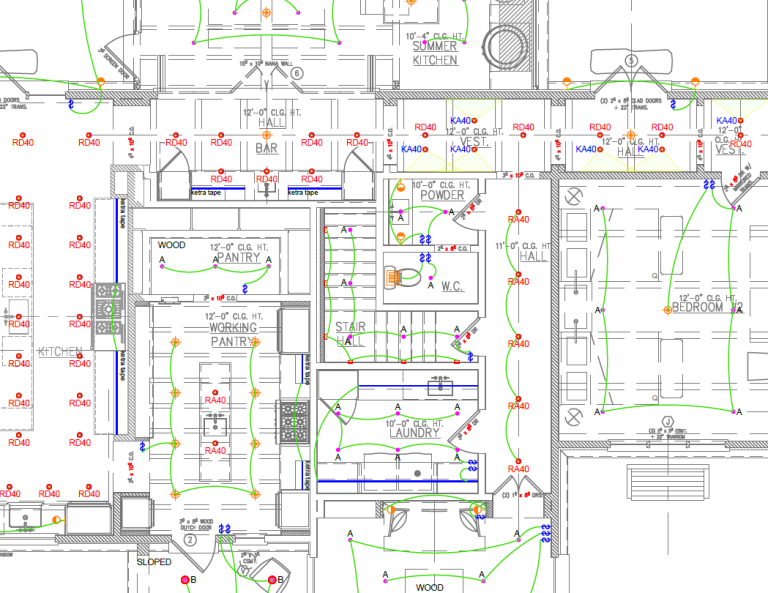
During construction, conduit gives us a protected pathway for power, data, speaker wiring, control wiring, and future expansion.
After patios, decks, hardscape, landscaping, and pools are complete, creating those pathways becomes much more difficult and invasive.
You may not know every device you will want five years from now.
But if the conduit is already there, you still have options.
That is also why early coordination matters so much in new construction. We cover that broader planning process in Why Smart Home Planning Should Start Before the Walls Close.
Placement Matters More Than People Expect
Outdoor technology should not just be placed where it fits.
A display needs to be positioned for viewing, glare, weather exposure, service access, and mounting structure.
Speakers need to be placed for even coverage without overwhelming one seating area.
Cameras need useful sightlines.
Wi-Fi access points need coverage.
Equipment should be protected but still accessible.
A system can use excellent products and still perform poorly if those products are in the wrong locations.
That is why layout and coordination matter.
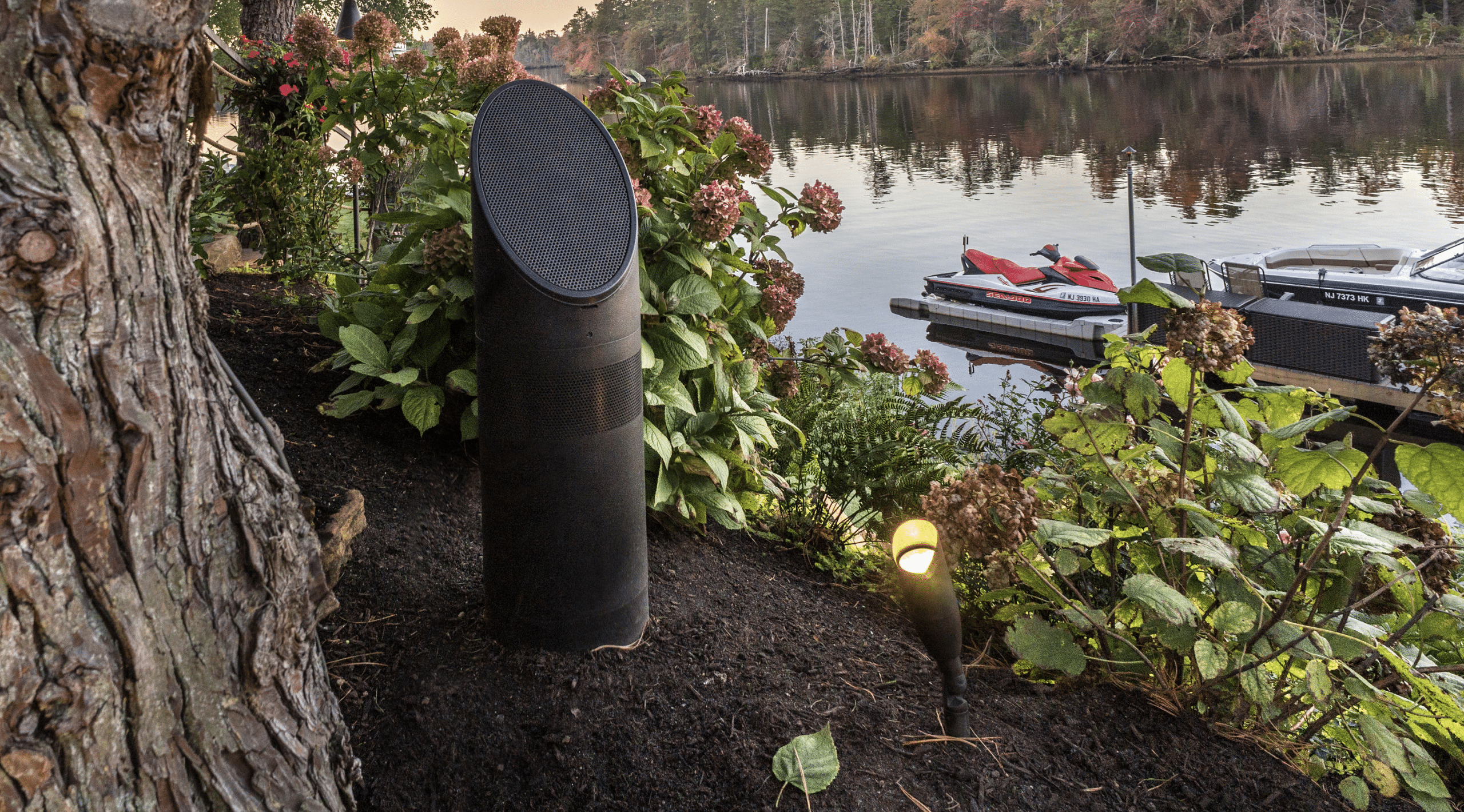

Outdoor Audio Should Blend Into the Space
Outdoor audio is a good example.
The goal is usually not to create one extremely loud speaker near the house.
A better design spreads sound more evenly through the area.
Depending on the project, that may include landscape speakers, architectural speakers, subwoofers, or line-source systems designed for larger outdoor areas.
The right approach depends on the property, landscape, neighboring homes, and how the outdoor spaces are actually used.
On closely spaced properties in places like Seven Mile Island, good outdoor audio design also means controlling where the sound goes.
A system should sound great on the patio without becoming the neighbor’s sound system too.
Cameras Need More Than an Outdoor Rating
Outdoor cameras also need careful planning.
The camera itself may be weather rated, but the installation still needs to protect cabling, connectors, mounting points, and network equipment.
More importantly, the camera needs to provide a useful view.
A perfectly weatherproof camera pointed at the wrong angle is not very helpful.
Lighting, reflections, sun position, landscaping, and changing seasonal conditions can all affect camera performance.
Good placement starts with what the homeowner actually wants to see.
Service Access Matters Later
Outdoor equipment eventually needs service.
Connections need to be inspected.
Devices may need replacement.
Network equipment may need troubleshooting.
Displays may need to come off a mount.
Landscape systems may need adjustment as plantings mature.
If everything is buried, sealed behind finished materials, or installed where no one can reach it, service becomes unnecessarily difficult.
We think about that during the design stage.
The cleanest installation is not always the one that hides every connection forever.
Sometimes the better design is the one that allows the system to be serviced without tearing the property apart.
Seasonal Homes Add Another Layer
Many South Jersey shore homes are not occupied year-round.
That changes how we plan outdoor systems.
Homeowners may want remote visibility, reliable network connectivity, lighting schedules, and systems that can recover properly after a power interruption.
Equipment also sits through long periods of heat, cold, storms, salt exposure, and inactivity.
Those conditions make reliability and remote support even more important.
That is also where SMART-Care can make a difference for seasonal homeowners. Our Concierge plan goes beyond remote support by taking into account the seasonal needs of the home, including outdoor technology and equipment that may need to be brought in, protected, or prepared before severe weather or extended periods away.
The technology needs to work when the homeowner arrives. Not after someone spends the first day of the weekend troubleshooting it.

Outdoor Smart Home Technology Should Work as One System
Outdoor technology should not feel like a separate collection of devices attached to the back of the house.
Lighting, audio, video, networking, cameras, control, and other systems can all work together.
That is where smart home integration matters.
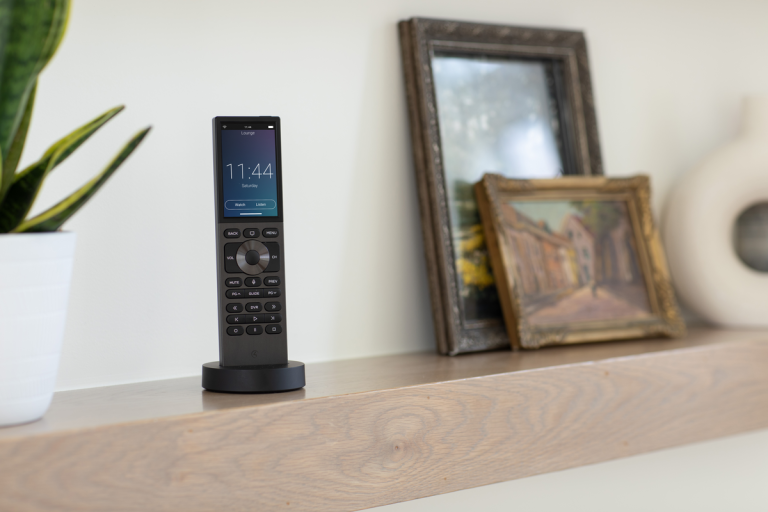
A homeowner should be able to use the outdoor spaces without thinking about which app, network, or device controls each piece.
The system should simply work.
At SHORE Smart Home, we design outdoor smart home technology around the property, the environment, and the way the homeowner actually uses the space.
We Integrate Smart Homes
Planning Outdoor Technology for a Shore Home?
SHORE Smart Home can help coordinate outdoor audio, video, networking, lighting, cameras, control, conduit, and equipment placement before the property is finished.
Good planning helps outdoor technology perform better, last longer, and remain easier to service.
For homeowners who want to explore outdoor system options, manufacturers such as Coastal Source design audio and lighting products specifically for demanding exterior environments, while integrated control platforms can bring outdoor systems together with the rest of the home.