
Smart home cost can vary dramatically.
That is partly because the term smart home covers a huge range of technology. It can describe anything from a few connected devices to a fully integrated home with lighting, shades, audio/video, climate, networking, security, outdoor technology, and centralized control.
A homeowner with Sonos speakers, a Ring doorbell, a Nest thermostat, and a few smart switches may reasonably describe their home as smart.
At the other end of the spectrum, a professionally integrated home may use platforms such as Control4, Lutron HomeWorks, Josh.ai, and other systems designed to work together as one coordinated environment.
Those are very different projects, and they carry very different budgets.
At SHORE Smart Home, our work begins where professional design, integration, and long-term support become part of the expectation.
We Integrate Smart Homes
Not Every Smart Home Is the Same
One reason smart home pricing can be confusing is that several very different types of systems all fall under the same broad label.
We generally think about the market in three levels.
DIY and Consumer Smart Home Products
This category includes products such as Sonos, Ring, Nest, Lutron Caséta, smart plugs, connected locks, and other products homeowners can purchase online or from retailers such as Home Depot or Lowe’s.
For many homeowners, these products can work very well for their intended purpose.
A homeowner may use one app for music, another for the thermostat, another for cameras, and another for lighting. The homeowner typically manages the accounts, credentials, configuration, updates, and troubleshooting.
SHORE Smart Home does not offer this as a standalone service pipeline. We generally do not have the remote-management access, credentials, or service tools needed to support these products to our standards.
That does not mean every consumer product has to disappear when a home moves toward professional integration. Products such as Sonos can often remain part of the system and become one component of a larger professionally designed solution.
Semi-Custom Smart Home Systems
The next level includes professionally designed systems that may still operate partly within their own individual platforms.
Examples might include Sonos, Ring Pro, Ecobee or Honeywell climate control, professional networking, and Lutron RadioRA 3 lighting and shading.
These systems offer greater design flexibility, reliability, and professional support than a collection of consumer products.
They may still use separate apps in some situations, but the infrastructure, installation, configuration, and overall system design are more deliberate.
For many homeowners, this level provides an excellent balance between capability and investment.
Fully Integrated Custom Smart Homes
A fully integrated smart home takes the concept further.
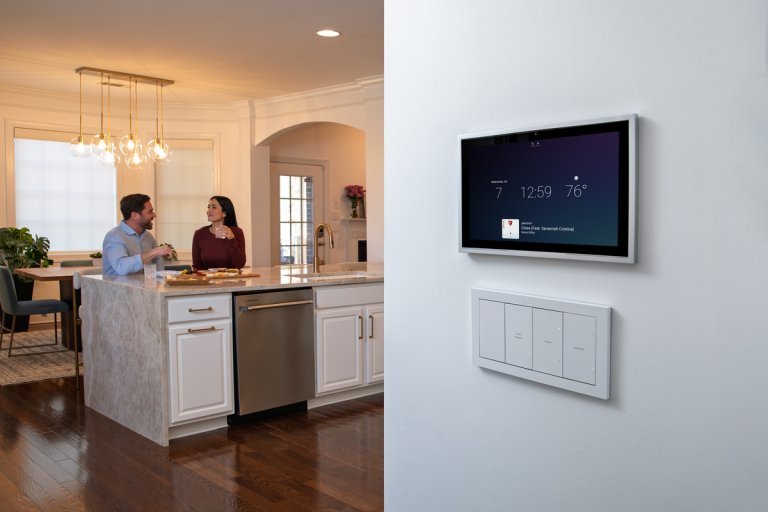
Systems such as Control4 and Lutron HomeWorks can provide the foundation for lighting, shades, audio, video, climate, security, access control, outdoor technology, and other systems to work together.
Products such as Sonos, Kaleidescape, Josh.ai, architectural lighting, motorized shading, outdoor audio, and other technologies can then become part of that larger ecosystem.
More importantly, the defining factor is not simply the number of products in the home.
It is Smart Home Integration.
Instead of managing a collection of unrelated apps, the homeowner uses systems that communicate, respond together, and operate as one coordinated home.
So What Actually Drives Smart Home Cost?
The size of the home matters, but square footage alone does not determine the budget.
Two homes of similar size can have completely different technology costs depending on what the homeowner wants the systems to do.
The biggest cost drivers usually include:
- lighting control
- motorized shades
- networking and Wi-Fi
- whole-home audio
- televisions and video distribution
- home theaters and media rooms
- climate integration
- security, cameras, and access control
- outdoor audio, video, lighting, and networking
- touchscreens, keypads, remotes, and other interfaces
- system programming
- engineering and documentation
- commissioning
- ongoing service and support
A homeowner who wants reliable Wi-Fi, several audio zones, and RadioRA 3 lighting is solving one kind of problem. A whole-home Control4 and Lutron HomeWorks system with motorized shades, Ketra lighting, outdoor entertainment, and Josh.ai is a very different project.
That is why no single number can accurately define smart home cost, such as “a smart home costs $50,000.”
What Is the Home Technology Association?
The Home Technology Association, or HTA, evaluates and certifies integration companies against defined standards. Those standards include technical competence, customer service, reputation, licensing, insurance, references, and long-term support. HTA says firms must meet more than 60 evaluation criteria and assigns certification tiers based on the scale and complexity of the projects they typically handle.
For homeowners, that gives HTA a different role from a manufacturer dealer locator or a general contractor directory. It provides an independent resource for understanding what qualified integration firms should look like and for finding companies HTA has already evaluated against a defined standard.
CEDIA serves the industry differently. It provides education, standards, research, training, and professional resources, while also giving homeowners tools for learning about smart home technology and finding qualified professionals. CEDIA generally certifies individuals, while HTA certifies integration companies.
SHORE Smart Home is HTA Certified at the Luxury level and recognized as an HTA Design Partner, reflecting the type of design, coordination, and project complexity we routinely handle.
What Does the Home Technology Association Recommend?
The Home Technology Association provides one of the better independent frameworks for thinking about smart home budgets.
HTA recommends using approximately 4% to 8% of a home’s value as an early planning guideline for technology systems. It also notes that the percentage should generally be lower in expensive real-estate markets such as Los Angeles, San Francisco, and New York.
That percentage is useful as a planning reference, but homeowners should not treat it as a universal formula—especially in coastal South Jersey.
Here, the value of the property may be heavily influenced by location, land value, proximity to the beach or bay, and the community itself. A multimillion-dollar home in Margate, Avalon, Stone Harbor, or another coastal community does not automatically require a technology budget comparable to a similarly valued estate in Los Angeles.
For South Jersey projects, scope is often a better predictor of smart home cost than home value alone.
HTA’s Technology Budget Calculator takes a more detailed approach. It asks about square footage, local labor costs, wiring conditions, system categories, and performance expectations. The tool includes structured wiring, networking, whole-home audio, televisions, theaters, lighting control, motorized shades, security, cameras, access control, automation, and other technology categories.
HTA says it developed the calculator using real project data and input from dozens of leading integration firms. Its estimates include equipment, labor, accessories, design, and engineering, which makes the results more useful than comparing hardware prices alone.
Why Lighting and Motorized Shades Can Move the Budget Quickly
Lighting and shading are two areas where smart home budgets can change rapidly.
A modest lighting-control system may involve a limited number of controlled loads and keypads.
A larger Lutron HomeWorks system may include dozens—or hundreds—of lighting loads, architectural keypads, panelized lighting, motorized shades, Ketra intelligent lighting, and detailed programming.
Motorized shades can also vary significantly depending on:
- the number of windows
- shade size
- fabric selection
- sheer versus blackout requirements
- single-roller versus dual-roller designs
- recessed pockets
- wiring
- control integration
This is why a home with 15 motorized shades and a home with 60 motorized shades can sit in completely different budget categories even when the homes themselves are similar in size.


The Network Is Part of the Smart Home Budget
Networking is sometimes treated as background infrastructure.
It should not be.
Every modern smart home depends on the network.
Streaming audio, televisions, Control4, Lutron gateways, Josh.ai, cameras, remote access, mobile devices, outdoor systems, and many other technologies rely on stable connectivity.
The Home Technology Association describes the network and Wi-Fi system as the foundation of the home’s technology environment and distinguishes between consumer-grade, professional-grade, and enterprise-grade networking.
That is why a professionally designed network is part of the smart home budget rather than something we add at the end.
If you want a clearer look at why the router matters so much, read our Insight, Do I Really Need a Router for My Home? It breaks down the role the router plays in network reliability, system performance, and remote support.
New Construction and Existing Homes Can Cost Differently
New construction gives us the greatest flexibility.
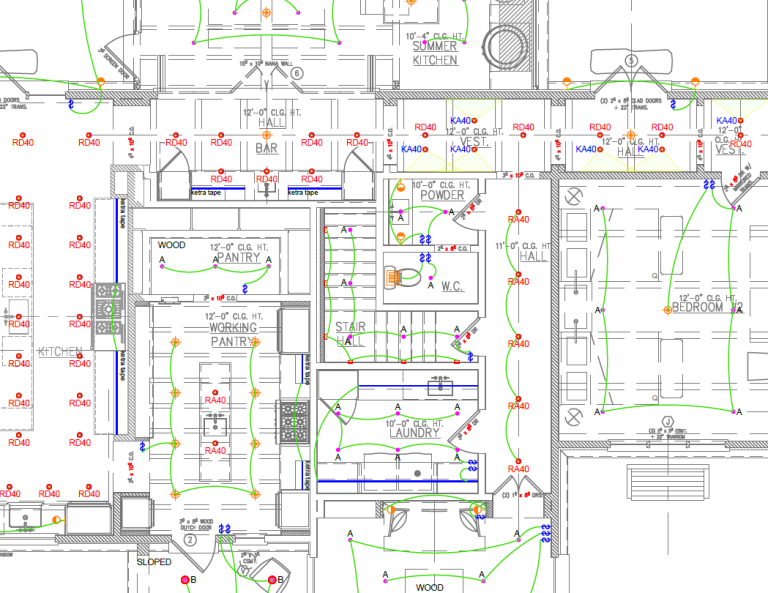
We can coordinate wiring, conduit, equipment locations, shade power, lighting-control panels, access points, speakers, cameras, displays, and other infrastructure before the builder finishes the walls and ceilings.
Retrofit projects can still be done extremely well, but the existing home determines what options are practical.
Finished walls, limited wiring paths, existing network infrastructure, legacy control systems, and equipment that may need to remain in place can all affect labor and design.
That is why smart home planning should ideally before the project team locks in the major construction decisions.
That early coordination is exactly why we recommend bringing the technology conversation into the project before the walls close. In Why Smart Home Planning Should Start Before the Walls Close, we explain how early decisions around wiring, conduit, shades, networking, lighting control, and equipment locations can preserve options and reduce compromises later.

Why the Cheapest Proposal May Not Be the Same Project
Price comparisons only make sense when the scopes are comparable.
A lower proposal may simply include less.
Networking, engineering, documentation, programming, commissioning, service tools, equipment quality, and future expandability can all affect the final price.
HTA makes a similar point in its budgeting guidance: installed-cost planning should consider the complete system rather than just the product list.
That does not mean the most expensive proposal is automatically the best proposal.
It means homeowners should understand what is actually included before comparing the headline numbers.
What Should You Budget for a Professionally Integrated Smart Home?
Semi-Custom Projects
Professionally designed networking, targeted lighting control for selected rooms or areas, audio, climate, cameras, or other systems without full whole-home integration.
A project at this level of integration could start around $50,000 to $60,000 and grow into the $120,000 to $130,000 range as the scope expands. More lighting control, motorized shades, additional audio zones, outdoor systems, cameras, and stronger networking can move the project toward the upper end of that range.
Integrated Whole-Home Projects
Multiple systems integrated through a central platform, including Control4, Lutron, whole-home lighting control, motorized shades, networking, audio/video, climate, cameras, and centralized interfaces.
As these projects scale, a fully integrated home could start around $150,000 and move beyond $250,000 when the scope includes extensive motorized window treatments, larger lighting-control systems, and additional integrated subsystems.
Large Custom Homes
Extensive lighting and shading, whole-home control, architectural audio/video, outdoor technology, advanced networking, theaters, Josh.ai, Ketra, Kaleidescape, and other high-performance systems.
At this level, projects could start in the $250,000 range and easily reach beyond $400,000 or more as the scope expands to include extensive motorized shading, Ketra lighting, dedicated theaters, large outdoor systems, higher-end audio/video, and more complex programming and coordination.
Why Early Budgeting Helps
The sooner a homeowner understands the desired scope, the easier it becomes to establish a realistic technology budget.
Early planning also allows the builder, architect, interior designer, electrician, HVAC contractor, and SHORE Smart Home to coordinate before important decisions become expensive to change.
That does not mean the homeowner must select every detail on day one.
It means the infrastructure and priorities should be understood early enough to preserve options.
Planning a Smart Home? Start With the Scope.
The better question is often not:
“What does a smart home cost?”
It is:
“What do I want the home to do?”
Once we understand the systems, rooms, priorities, construction conditions, and level of integration, the budget becomes much easier to define.
SHORE Smart Home helps homeowners and project teams design that scope before the team selects equipment and locks in important construction decisions.