
Yes. You can absolutely upgrade a finished home with smart home technology.
The real question is how much you want to integrate, what infrastructure already exists, and how much access the home gives us to wiring, power, networking, and equipment locations.
Some upgrades are straightforward. Others require more planning, creative wiring paths, or selective access to finished walls and ceilings.
A completed home is not automatically a problem. It simply changes how we design the project.
At SHORE Smart Home, we regularly work in finished homes, renovations, and existing systems throughout South Jersey.
We Integrate Smart Homes.
What Smart Home Upgrades Can Be Added After Construction?
More than many homeowners expect.
Depending on the home and the existing infrastructure, smart home upgrades may include:
- professional networking and Wi-Fi
- lighting control
- motorized shades
- whole-home audio
- televisions and video systems
- cameras and video doorbells
- climate integration
- smart locks and access control
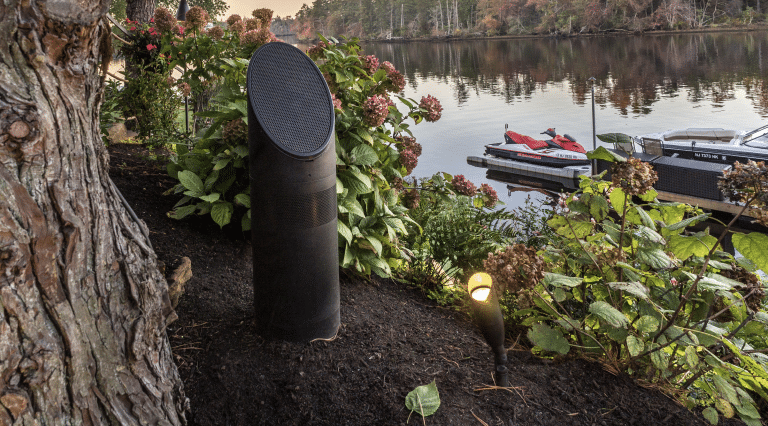
- outdoor audio and Wi-Fi
- Control4
- Josh.ai
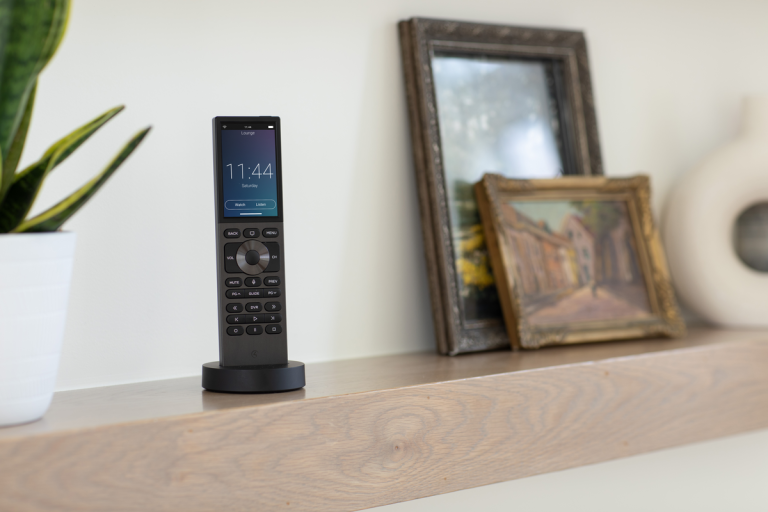
- centralized control and automation
Some systems can use existing wiring. Others may rely on wireless technology. In many homes, a combination of wired and wireless systems creates the best result. The key is understanding what the house already gives us before deciding how to design the finished system.
Start With the Existing Infrastructure
Before adding new technology, we first need to understand what is already there.
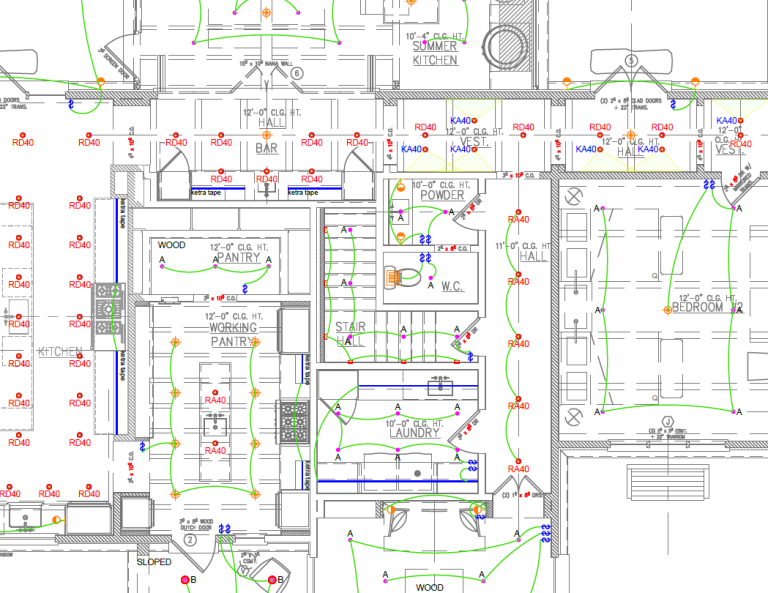
That includes more than checking for a few network jacks or speaker wires.
We may need to evaluate:
- existing Cat5e or Cat6 wiring
- coaxial cable
- speaker wiring
- electrical panels
- lighting circuits
- wireless coverage
- equipment locations
- attic or crawlspace access
- conduit
- existing control systems
- abandoned or undocumented wiring
A home can look completely finished while still offering very good access behind the scenes.
An attic, crawlspace, basement, utility room, or well-placed equipment closet can make a major difference.
This is also why we recommend evaluating an existing smart home system before assuming it can simply be expanded or taken over.
Networking Is Usually the First Place to Look
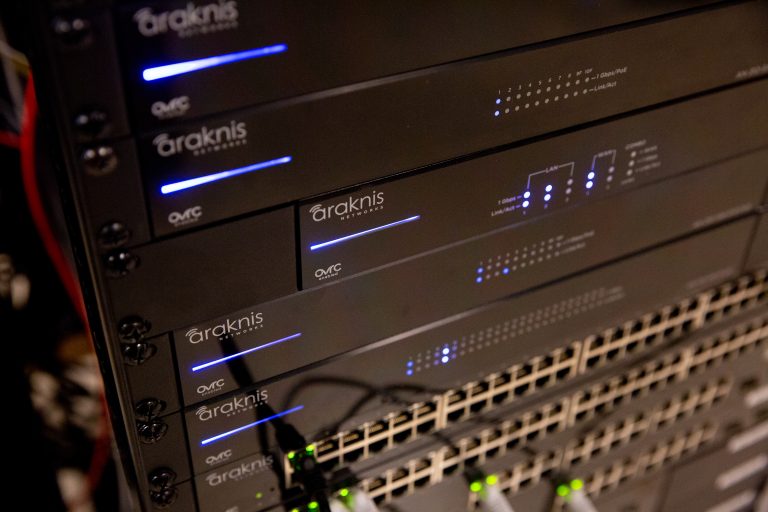
Most modern smart home systems depend on the network.
That makes networking one of the first things we evaluate in a finished home.
A homeowner may already have working Wi-Fi, but that does not necessarily mean the network is ready to support cameras, lighting gateways, audio systems, remote access, automation, and dozens of connected devices.
In some cases, the existing network only needs improvement. Other times, we need to redesign access-point locations, hardwired connections, switching, or equipment.
Wireless technology can help in a finished home, but it should not be used to cover up a weak network. A reliable smart home still needs a solid foundation.
For a deeper look at why that matters, read Do I Really Need a Router for My Home?
Can Lighting Control Be Added Without Rewiring the House?
Often, yes.
This is one of the biggest advantages of modern lighting-control systems.
A finished home does not always need to be completely rewired to gain centralized lighting control.
Systems such as Lutron RadioRA 3 can work very well in existing homes because they can replace traditional switches and dimmers while adding centralized control, scenes, schedules, and keypad functionality.
Larger projects may still justify Lutron HomeWorks, depending on the scope and the home.
The right choice depends on:
- the number of controlled loads
- keypad locations
- fixture compatibility
- desired automation
- existing electrical conditions
- how much of the home the homeowner wants to control
The important part is choosing the right architecture for the existing house rather than forcing a new-construction design into a finished home.
Motorized Shades Can Often Be Added Later Too
Motorized shades are another system homeowners sometimes assume had to be planned during construction.
Of course. early planning certainly gives us more options, especially for concealed pockets and hardwired power. But that does not mean shades are off the table in a finished home. Battery-powered and retrofit-friendly shade solutions can work very well when wiring was not installed during construction.
The tradeoff is usually between concealment, power options, and how much construction access is available. A finished home may not give us the same hidden infrastructure as a new build, but it can still support a polished motorized-shade system
We explain the planning side in When Should I Plan Motorized Shades in a New Home?
Audio and Video Depend Heavily on Access
Adding televisions is usually straightforward.
Whole-home audio can depend much more on the construction of the home. Attic access, crawlspaces, basements, closets, and existing wiring paths all affect what we can do cleanly.
Sometimes we can reach speaker locations without disturbing finished surfaces. Other times, selective drywall access may make more sense than trying to avoid every opening. That sounds more invasive than it often is.
A few carefully planned access points can sometimes create a much better long-term result than compromising the system just to avoid opening a wall. The goal is not zero disruption at all costs. The goal is the least disruption required to create the right system.
Wireless Does Not Mean No Planning
Wireless technology has made smart home upgrades in finished homes much easier.
But wireless does not mean infrastructure no longer matters.
Devices still need:
- reliable networking
- power
- strong wireless coverage
- proper placement
- stable control architecture
- service access
A finished home can often use more wireless technology than a new-construction project, but we still need to design the system intentionally.
The difference is that the design adapts to the home instead of assuming every wall is open.
What About Control4 in an Existing Home?
Control4 can work very well in an existing home.
The platform does not require the house to be new.
What matters is whether the systems we want to control can communicate reliably and whether the necessary network, power, and control infrastructure can support the project.
A retrofit Control4 project might begin with:
- televisions
- audio
- lighting
- climate
- cameras
- door locks
- motorized shades
Then we can integrate additional systems as the project expands.
That flexibility is one reason a finished home can still become a genuinely integrated smart home rather than just a collection of separate apps.


When Do Smart Home Upgrades Become More Difficult?
Finished homes create more challenges when infrastructure is missing and access is limited.
Common examples include:
- no attic or crawlspace access
- finished basements below key rooms
- masonry construction
- limited equipment space
- no conduit to exterior areas
- poor existing network wiring
- inaccessible shade power
- old or undocumented wiring
- finished ceilings with no practical cable path
None of these automatically prevents an upgrade.
They simply affect cost, labor, system design, and the compromises that may be necessary.
That is why a site evaluation matters.
Two homes of the same size can require completely different upgrade strategies.
Sometimes a Small Amount of Construction Is the Better Choice
Homeowners understandably want to avoid opening finished walls.
We do too. However, there are times when a small amount of controlled access is the smarter decision.
Opening a few strategic areas may allow us to install proper wiring, create cleaner equipment locations, add conduit, or improve long-term reliability.
Trying to avoid every drywall opening can sometimes lead to a more complicated system with more wireless dependence and fewer options.
The better question is not:
Can we avoid opening anything?
It is:
What is the least invasive way to build the system correctly?
Should You Upgrade Everything at Once?
Not necessarily.
One advantage of working in an existing home is that the project can often be phased.
A homeowner might begin with networking and lighting control.
Over time, they may add:
- motorized shades
- audio
- outdoor technology
- cameras
- climate integration
- additional Control4 interfaces
A well-designed first phase should make later phases easier rather than creating another system that eventually needs to be replaced.
That is where integration planning matters.
Even when the homeowner is not doing everything at once, the long-term system should still have a direction.
A Finished Home Can Still Be a Fully Integrated Smart Home
New construction gives us the most freedom because walls are open and infrastructure can be planned from the beginning.
But new construction is not the only path to a professionally integrated home.
A finished home can still support excellent networking, lighting control, motorized shades, audio/video, cameras, climate control, outdoor technology, and whole-home automation.
The design simply needs to respect the realities of the existing house.
Sometimes that means wireless technology.
In other cases, we can reuse existing wiring.
A small section of drywall or added conduit may also provide the best path forward.
And sometimes the home already has more usable infrastructure than the homeowner realizes.
The first step is finding out what is there.
Planning Smart Home Upgrades for an Existing Home?
Before buying a collection of individual smart products, start with the systems you want to control and how you want them to work together.
SHORE Smart Home evaluates the existing infrastructure, identifies what can be reused, and designs new technology around the home rather than forcing the home around the technology.
That approach helps preserve good existing infrastructure, avoid unnecessary construction, and create a system that can continue to grow.