
Not necessarily, but a smart home integrator should be involved early enough to coordinate with the electrician before rough-in begins.
If you are building or renovating a home and expect to include lighting control, motorized shades, networking, audio/video, cameras, access control, or a larger automation platform, the smart home integrator should be involved early enough to coordinate with the electrician before rough-in begins.
The electrician and integrator have different responsibilities.
The electrician handles the electrical infrastructure of the home.
The smart home integrator plans how technology systems connect, communicate, and work together.
Those two scopes overlap more than many homeowners realize.
That is why the timing matters.
What Does a Smart Home Integrator Actually Do?
A smart home integrator does more than install televisions, speakers, or control panels.
The job is to understand how the technology systems in the home affect one another.
That can include:
- networking and Wi-Fi
- lighting control
- motorized shades
- audio and video
- climate integration
- cameras and access control
- outdoor technology
- centralized equipment
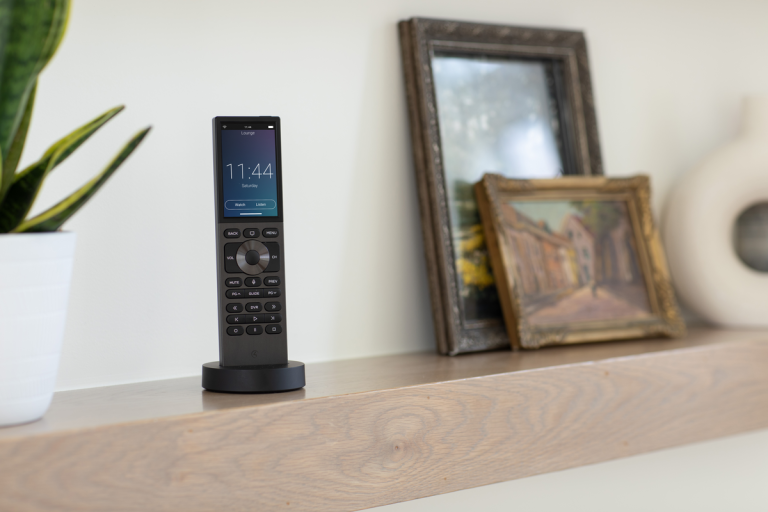
- keypads, touchscreens, remotes, and other interfaces
- automation and programming
- long-term service and support
The goal is to create one coordinated system rather than a collection of unrelated products.
At SHORE Smart Home, that is the foundation of our work.
We Integrate Smart Homes.
What Does the Electrician Handle?
The electrician remains one of the most important trades on the project.
They are responsible for the home’s electrical systems, including branch circuits, panels, outlets, switches, lighting power, code compliance, and other line-voltage work.
On a smart home project, the electrician may also install power for motorized shades, equipment racks, televisions, network equipment, lighting-control panels, and other technology systems.
That is why the relationship between the electrician and smart home integrator matters.
Neither trade replaces the other.
The project works best when both teams understand what the other needs before installation begins.
Lighting Control Is Where the Two Trades Often Meet
Lighting control is one of the clearest examples of why early coordination matters.
A conventional electrical plan may show switches and dimmers throughout the home.
A larger smart lighting system may approach that design very differently.
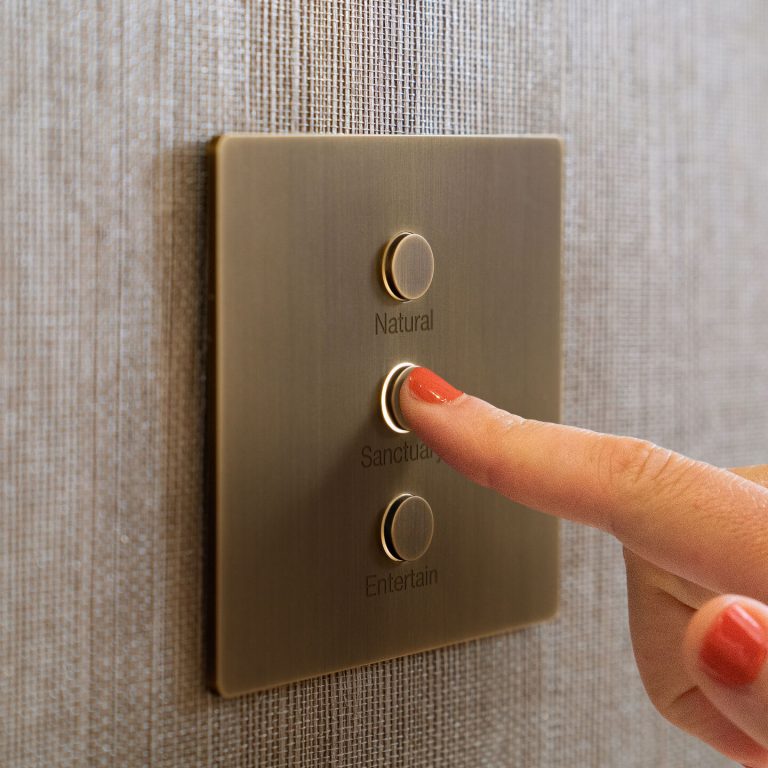
For example, a Lutron HomeWorks system may use panelized lighting in some areas, architectural keypads in others, and centralized control of dozens of lighting loads.
That can affect:
- electrical panel design
- homerun wiring
- keypad locations
- switch locations
- controlled loads
- fixture compatibility
- dimming requirements
- emergency or switched circuits
Those decisions affect the electrician’s work directly.
If the smart home integrator becomes involved after the electrical rough-in is complete, the team may have fewer options and more rework.
Motorized Shades Need Electrical Coordination Too
Motorized shades are another area where the electrician and integrator may need to coordinate.
Some shade systems require dedicated power.
Others may use low-voltage wiring.
The final design can depend on window size, shade type, pocket details, framing, fabric selection, and whether the homeowner wants single or dual shades.
The integrator determines what the shade system requires.
The electrician may provide the power infrastructure that supports it.
That is much easier when everyone knows the plan before the walls and ceilings are finished.
Networking Is Not the Electrician’s Job by Default
One of the most common mistakes in new construction is assuming that someone else is handling the network.
The electrician may install Cat6 wiring if the plans call for it, but that does not automatically mean someone has designed the network.
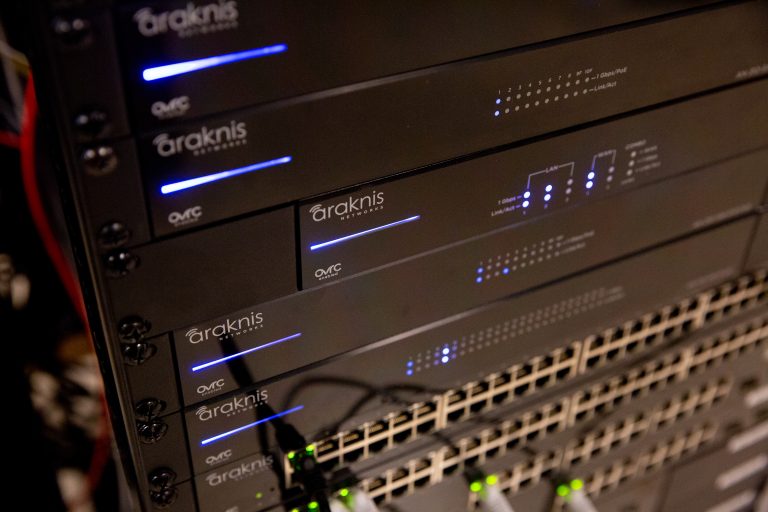
A professional network requires decisions about:
- router location
- switches
- wireless access points
- equipment racks
- hardwired devices
- outdoor Wi-Fi
- cameras
- televisions
- control systems
- remote-management access
Those decisions should come from the overall technology plan.
Simply pulling network cable to random rooms is not the same as designing a network. The network also becomes the foundation for control, audio/video, cameras, remote support, and many other connected systems. For a deeper look at why that matters, read Do I Really Need a Router for My Home?
The Same Is True for Audio, Video, and Control
Speaker wiring, television locations, equipment racks, control processors, touchscreens, cameras, doorbells, gates, and outdoor systems all benefit from early planning.
The electrician may provide power to many of those locations.
The smart home integrator determines how the systems connect and what infrastructure they need.
That distinction becomes especially important when the homeowner wants the systems to work together through a platform such as Control4.
So Who Should You Hire First?
In most cases, the answer is not one or the other.
The better goal is to have both trades involved before rough-in.
A homeowner may already have an electrician through the builder. That is completely normal.
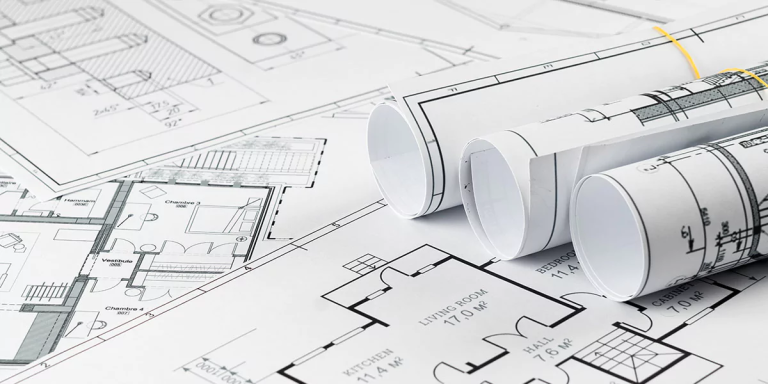
The smart home integrator should then join the project early enough to review the plans, identify technology requirements, and coordinate those requirements with the electrician and other trades.
On larger custom homes, that conversation should ideally begin during design development rather than after framing is complete.
The earlier the coordination begins, the more options the homeowner keeps.
What Happens When the Integrator Comes in Too Late?
A lot can still be done after rough-in.
But late involvement may create compromises.
For example:
- keypad locations may already be fixed
- shade power may be missing
- conduit may not exist
- network wiring may be incomplete
- equipment locations may be difficult
- lighting loads may already be divided incorrectly
- speaker and camera locations may require extra labor
- finished walls may limit wiring paths
None of those problems automatically kills the project.
They simply make the project harder than it needed to be.
That is also why we recommend planning the smart home prewire before the walls close. In What Should Be Prewired in a New Smart Home?, we break down the networking, audio, video, shades, lighting-control, camera, outdoor, and conduit infrastructure that should be considered before construction moves too far.


Builders, Architects, and Designers Matter Too
The electrician and integrator are not the only people affected by technology decisions.
Architects may influence equipment locations, ceiling conditions, wall layouts, and sightlines. Interior designers affect keypad finishes, shade pockets, display locations, lighting fixtures, and millwork. HVAC contractors may need to coordinate thermostats and climate interfaces.
Builders keep those scopes moving in the right sequence, while the technology integrator helps connect the conversations.
For homeowners who want to better understand the role of a professional technology integrator, CEDIA provides a homeowner guide to working with qualified home technology professionals.
That does not mean taking control of the project. It means making sure technology decisions happen early enough to fit the architecture, interiors, electrical plan, and construction schedule.
The Best Time to Bring in a Smart Home Integrator
If you are planning a new home or major renovation, the best time to involve a smart home integrator is before electrical and low-voltage rough-in begins.
Earlier is even better when the project includes:
- whole-home lighting control
- motorized shades
- centralized equipment
- extensive networking
- architectural audio
- cameras and access control
- outdoor technology
- Control4 or another whole-home automation platform
The goal is not to select every product at the beginning of the project.
Early planning is less about choosing every device and more about protecting the right options while the home is still easy to wire and coordinate. We explain that broader planning strategy in Why Smart Home Planning Should Start Before the Walls Close.
The important part is making the infrastructure decisions before those choices become harder or more expensive to change.
Planning a Smart Home? Start With the Scope.
A good smart home does not come from one trade working in isolation.
It comes from the builder, electrician, architect, designer, HVAC contractor, and smart home integrator understanding how their work affects the finished home.
SHORE Smart Home works with project teams throughout South Jersey to coordinate technology before rough-in and help preserve the options that matter later.