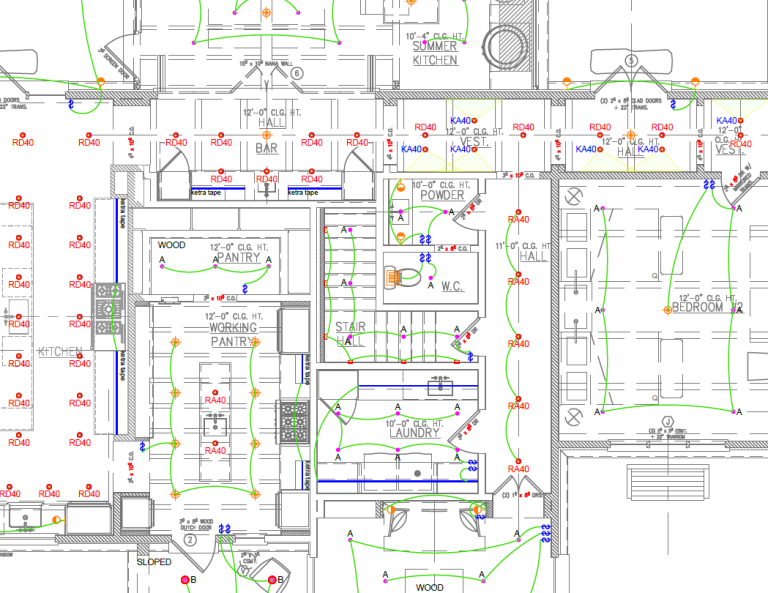

A smart home prewire is not just a pile of cable pulled before drywall.
It is the infrastructure plan for the systems the home may use now and later.
That can include networking, televisions, audio, motorized shades, lighting control, cameras, doorbells, access control, outdoor technology, and the equipment that ties everything together.
The best time to make those decisions is before the builder finishes the walls and ceilings.
That does not mean the homeowner needs to select every product on day one. It means the team should plan pathways, power, wiring, and equipment locations early enough to preserve options.
At SHORE Smart Home, that planning is part of how we integrate the home from the beginning.
We Integrate Smart Homes
What Does Smart Home Prewire Actually Mean?
Smart home prewire includes the wiring and infrastructure the team installs before finishing the home.
That can include low-voltage cabling, speaker wire, shade power, conduit, equipment-rack locations, access-point wiring, camera locations, and other system-specific infrastructure.
The goal is not to predict every device the homeowner may want ten years from now.
The goal is to make sure the home does not become difficult or expensive to upgrade because the necessary pathways were never created.
A good prewire gives the homeowner options.
A poor prewire can lock those options out before the house is even finished.
Start With the Network
Every modern smart home depends on the network.
That means the smart home prewire should account for more than a single internet connection and a wireless router sitting in a cabinet.
We typically plan for:
- hardwired network connections
- wireless access-point locations
- televisions and streaming devices
- control processors
- cameras
- outdoor Wi-Fi
- equipment racks
- pool equipment
- generator
- future devices that may benefit from a wired connection
The goal is to create a strong wired backbone first and use Wi-Fi where it makes sense.
That matters because lighting gateways, control systems, audio, video, cameras, mobile devices, and remote support all depend on a reliable network.
If you want a clearer look at why the router matters so much, read our Insight, Do I Really Need a Router for My Home?
Prewire for TVs and Video
The team should plan television locations before finishing the walls.
A modern TV location may need:
- network connectivity
- control wiring
- power coordination
- wiring back to centralized equipment
- room for future upgrades
The important part is not just getting a cable behind the television.
It is thinking through how the display will connect to the rest of the home, where source equipment will live, and whether the homeowner may want a different display or video system later.
Whole-Home Audio Needs a Plan Too
Whole-home audio is much easier to design before the builder closes the ceilings.
Speaker locations affect wiring routes, amplifier locations, equipment racks, and the way rooms are divided into audio zones.
That applies to indoor spaces and outdoor living areas.
A homeowner may not want speakers in every room on day one, but prewiring selected areas can preserve those options.
It is also important to think about subwoofers, television audio, outdoor speakers, and specialty audio locations before finishes make wiring difficult.
Motorized Shades Should Be Planned Early
Motorized shades can be added later, but the cleanest installations usually happen when shade power and pockets are planned during construction.
Window size, framing, trim details, recessed pockets, fabric selection, and shade power can all affect the final design.
If the shade system is part of the smart home plan, wiring should be coordinated before the window treatments are installed and before ceilings or headers are closed.
That becomes especially important with larger window groups, dual shades, and homes where the architect or interior designer wants the hardware hidden.
We go deeper into that topic in When Should I Plan Motorized Shades in a New Home?
Lighting Control and Keypads Need Early Coordination
Lighting control is one of the areas where the smart home prewire can change significantly depending on the system.
A Lutron RadioRA 3 project may use a different wiring approach than a larger Lutron HomeWorks system with panelized lighting.
The team also needs to plan keypad locations early.
A well-designed keypad can replace rows of individual switches and create a cleaner wall, but only if the lighting loads, switch locations, and electrical design are coordinated before rough-in.
That is why the technology integrator and electrician need to be working from the same plan.
Fixture selections can also affect the final lighting-control count, which is why those quantities often change as a project develops.
We cover that in Why Lighting Control Counts Can Change During a Project.
Cameras, Doorbells, and Access Control
Camera and access locations should also be part of the prewire discussion.
That may include:
- front-door video doorbells
- exterior cameras
- garage doors
- gates
- door locks
- intercom locations
- network connections at exterior entrances
The goal is not to cover the property with devices.
It is to place wiring where visibility, access, and control are likely to matter.
Planning those locations early also makes it easier to avoid awkward surface wiring later.
Outdoor Technology Needs Infrastructure Too
A homeowner may not know today whether a future pool house, outdoor display, or gate system will be added.
That is a mistake.
Outdoor audio, televisions, Wi-Fi, cameras, gates, landscape areas, pools, and future structures may all need power, data, control wiring, or conduit.
A homeowner may not know today whether a future pool house, outdoor display, or gate system will be added.
That is exactly why conduit can be so valuable.
The equipment can change later.
The pathway is the part that becomes difficult once patios, decks, landscaping, and pools are finished.

Conduit Helps Future-Proof a Smart Home Prewire
Not every future technology can be predicted.
That is why conduit can be such an important part of a smart home prewire.
A properly placed conduit can provide a protected pathway for future power, data, speaker wiring, control wiring, or new technologies that do not exist yet.
Useful locations may include:
- equipment rack to attic
- equipment rack to crawlspace
- detached structures
- gates and driveways
- pool houses
- intercom locations
- future display locations
The goal is not to put conduit everywhere.
It is to create pathways where future access would otherwise be difficult or destructive.
What If You Have Not Decided on Every System Yet?
That is normal.
A homeowner may know they want good networking, audio, and lighting control but may not yet know whether they want motorized shades in every room or an outdoor television.
That does not prevent good smart home prewire planning.
We can still identify the areas where wiring, power, and conduit should be preserved.
In many cases, it is easier to leave a pathway now than to open finished walls later.
That flexibility can be more valuable than trying to make every product decision at the beginning of the project.
The Electrician and Integrator Have Different Jobs
The electrician plays a critical role in the project.
So does the technology integrator.
The two disciplines overlap in areas such as lighting control, shade power, equipment power, keypads, and wiring pathways.
The integrator is responsible for understanding how the technology systems fit together and what infrastructure those systems require.
The electrician is responsible for the electrical work that supports them.
The best projects happen when both teams coordinate before rough-in instead of trying to solve conflicts after the walls are closed.
That is also why bringing the technology conversation into the project early matters so much. In Why Smart Home Planning Should Start Before the Walls Close, we explain how early coordination can preserve options and reduce compromises later.
Industry organizations such as CEDIA also emphasize the importance of planning home technology infrastructure early in the construction process.

Planning a New Home? Prewire Before the Walls Close.
A good smart home prewire does not require the homeowner to know every device they will ever want.
It requires a clear plan for the systems that matter, the infrastructure they need, and the areas where future flexibility is worth protecting.
SHORE Smart Home works with homeowners, builders, architects, designers, electricians, and other trades to coordinate those decisions before the home is finished.
That makes the technology easier to install, easier to expand, and easier to support over time.